
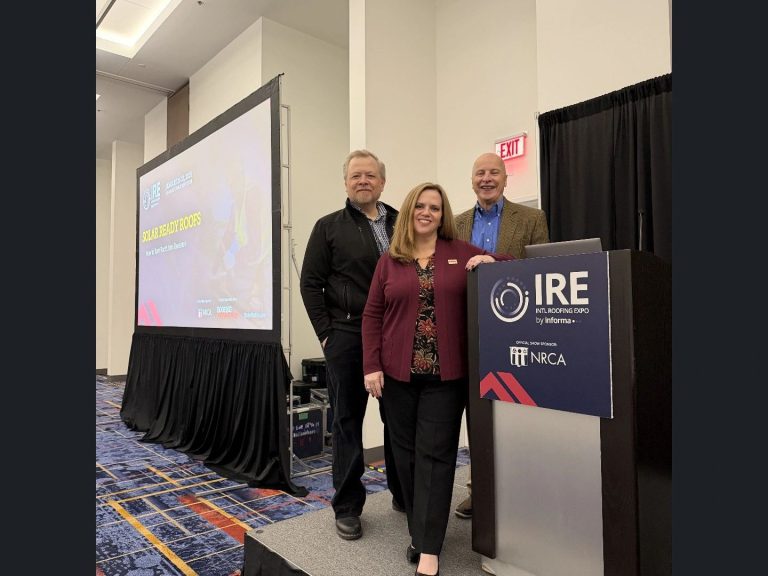
The International Roofing Expo (IRE) once again delivered a strong mix of education, networking, and industry dialogue, with more than 45 educational sessions across nine tracks covering topics ranging from general business strategy and workplace safety to single-ply systems, EPDM… Read More
ERA Initiatives
ERA is involved in a variety of efforts, this “ERA Initiatives” page reflects larger efforts that ERA has provided significant leadership on.
Solar Ready EPDM Roofs
Presented at the International Roofing Expo in January 2026. Solar-Ready Roofs: How to Turn Roofs into Revenue As rooftop solar demand continues to grow, roofing contractors are uniquely positioned to lead these projects when they understand what solar-ready truly requires…. Read More
Technical Bulletin #104: Roof Color and Reflectivity

EPDM roofing delivers proven, science-based performance that goes beyond the outdated “black vs. white roof” debate. As modern building codes require significantly higher insulation levels, research consistently shows that insulation, not surface reflectivity, is the primary driver of energy efficiency in many U.S. climates, particularly ASHRAE Climate Zones 4–8. Multiple recent studies, including work by Harvard and ICF, find no consistent link between highly reflective white roof mandates and urban heat island reduction, while highlighting potential downsides such as increased heating demand, moisture risks, and unintended climate impacts. EPDM has a long track record of stable performance in real-world conditions where durability, insulation, and lifecycle outcomes matter most.
With an average service life of approximately 38 years, EPDM roofing systems significantly outperform many highly reflective membranes, reducing replacement frequency, embodied carbon, and total cost of ownership. EPDM offers exceptional durability, ease of repair, and compatibility with solar installations and vegetative roofs, making it a reliable foundation for long-term sustainability strategies. For building owners seeking a low-risk, resilient roofing solution backed by current research, EPDM provides consistent energy performance, avoids hidden moisture concerns, and supports long-term asset planning across a wide range of climates.
Holistic Roof System Design and Sustainable Roofing Assemblies (formerly known as black roofs vs white roofs)
Although the discussion over roof color has shifted toward holistic roof system design and sustainable assemblies, the older “black vs. white” framing still shapes policy and perception. Revisiting these simplistic arguments helps explain why some stakeholders maintain this view, despite… Read More
Emerging Trends in EPDM Roofing
Sustainability was a pervasive theme in 2024, leading to significant progress in research dissemination, advocacy, media engagement, and sustainability initiatives—all of which continue to point EPDM as the gold standard for roofing. “While new technologies emerge in the roofing industry,… Read More
ERA Joins Roofing Industry Leaders, Advocates on Capitol Hill

The EPDM Roofing Association proudly sponsored Roofing Day in D.C., joining industry peers to advocate for critical workforce solutions, tax reforms, and sustainability initiatives directly with lawmakers, reinforcing the vital role roofing plays in building America’s future. ******************************************************************************************************************************************************************************** The EPDM… Read More
ERA Strengthens Industry Connections at 2025 IIBEC Convention

The EPDM Roofing Association highlighted its commitment to industry collaboration by attending the 2025 IIBEC Convention, connecting with peers and exploring cutting-edge topics shaping the future of roofing and building enclosures. ******************************************************************************************** The EPDM Roofing Association (ERA) actively supports the… Read More
An Updated Holistic Look at Old Assumptions: Insights from Three New Studies on Roof Albedo
THE GROWING AWARENESS of climate change, as well as the related issues of urban heat islands and steadily increasing energy costs, has led to a growing interest in the effectiveness of reflective, or “cool” roofs (i.e., roofs that are designed… Read More
Coalition Urges Support for Sustainable Building Energy Codes

In late May, a coalition led by the ICC and supported by ERA sent a letter to the House Subcommittee on Energy, Climate, and Grid Security. Signed by nearly 40 organizations representing state/local, housing, manufacturing, contractor, sustainability, engineering, design, and… Read More
Industry Survey on Re-Roofing Business Activity Needs Info from Contractors and Consultants
A leading coalition of roofing associations is continuing the Quarterly Market Index Surveys, designed to provide a barometer of the industry’s business conditions. The one-of-a-kind poll follows a successful effort that started in 2021, drawing on the views of contractors… Read More
ERA Publishes Guide to Sustainable Roofing Systems
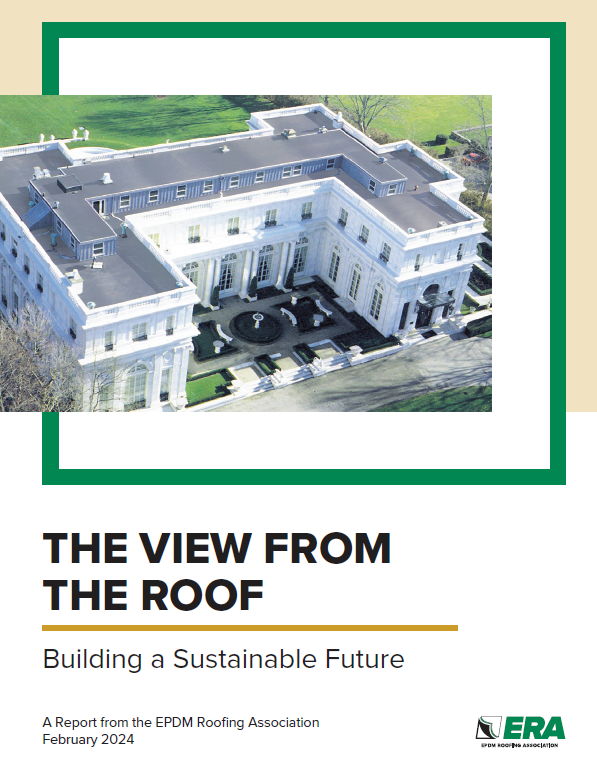
Report Details Impact of Roof Albedo on Urban Heat Islands and Energy Efficiency Washington, D.C., March 8, 2024 – The EPDM Roofing Association (ERA) is publishing “The View From the Roof: Building a Sustainable Future”, a comprehensive guide to… Read More
Q4 2023 Market Index Survey for Reroofing Shows Stability or Growth
The results for the Q4 2023 Market Index Survey for Reroofing are now available. Below are a few topline highlights of the recent survey. Respondent Demographics: Business Type: Roofing contractors comprised 72% of respondents; roofing consultants comprised 28% of respondents…. Read More