What is EPDM?
This section provides an overview of EPDM roofing membranes, including how they are manufactured, installed, maintained, and used in buildings around the world. It brings together technical information, performance characteristics, installation approaches, and field applications to help building owners, designers, contractors, and policymakers understand how EPDM functions as part of a complete roof system. Drawing on decades of real-world performance and continued product development, the information presented here supports informed decisions about roof system selection, installation, repair, and long-term management across a wide range of building types and climates.
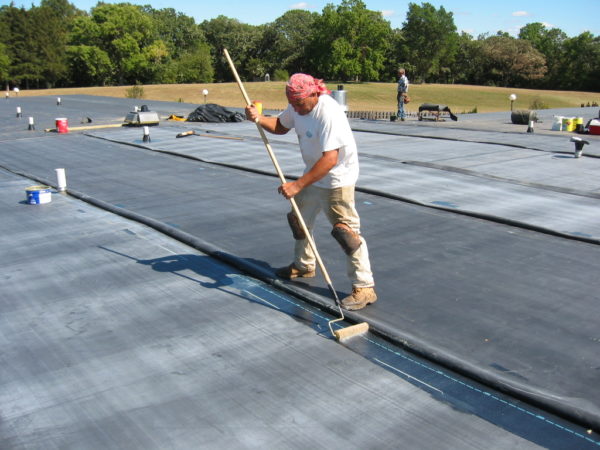
In brief, EPDM is an extremely durable synthetic rubber roofing membrane (ethylene propylene diene terpolymer) widely used in low-slope buildings in the United States and worldwide. Its two primary ingredients, ethylene and propylene, are derived from oil and natural gas. EPDM is available in black, gray, and white and is sold a broad variety of widths, ranging from 7.5 feet to fifty feet, and in three thicknesses, 45, 60, and 90 mils. EPDM can be installed either fully adhered, mechanically attached or ballasted, with the seams of the roofing system sealed with liquid adhesives or specially formulated tape.